← homeProgramming (Програмування)

What are TCL (Transaction Control Language), DCL (Data Control Language), and DQL (Data Query Language)

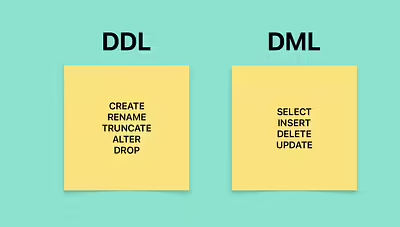
TCL (Transaction Control Language), DCL (Data Control Language) and DQL (Data Query Language) are important elements in databases. Previously, we discussed DDL and DML. For a complete understanding, we will also look ...

Table of contentsClick link to navigate to the desired location
This content has been automatically translated from Ukrainian.
TCL (Transaction Control Language), DCL (Data Control Language) and DQL (Data Query Language) are important elements in databases. Previously, we discussed DDL and DML. For a complete understanding, we will also look at TCL, DCL, and DQL.

TCL (Transaction Control Language)

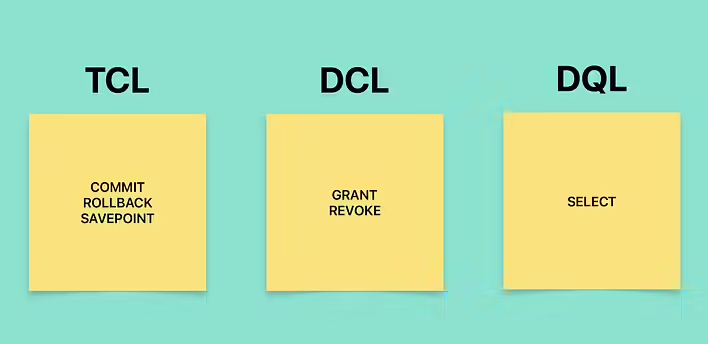
TCL is used to manage transactions in a database. It allows for commit (confirmation), rollback (cancellation), and savepoint operations in the database.
  • COMMIT: Confirmation of a transaction.
  • ROLLBACK: Cancellation (rollback) of a transaction.
  • SAVEPOINT: Saving a restore point within a transaction.

DCL (Data Control Language)

DCL is used to manage access rights to data in a database. It includes granting or revoking access rights to users and roles, as well as managing privileges.
  • GRANT: Granting access rights to users or roles.
  • REVOKE: Revoking access rights from users or roles.

DQL (Data Query Language)

DQL is a data query language used for retrieving (searching) data from a database. It allows for various queries to obtain the necessary information from the database.
  • SELECT: Retrieving (searching) data from the database using various conditions and criteria.

Difference between TCL, DCL, and DQL

TCL is used for managing transactions, DCL is for managing access rights, and DQL is for retrieving data from the database. Each of these languages plays an important role in the management and use of databases.

🔥 More posts

All posts
Programming (Програмування)Mar 5, '24 19:38

What is Service Discovery in IT?

Service Discovery (service discovery) in the field of information technology is an important aspe...

Programming (Програмування)Mar 7, '24 18:36

What is Clustering in IT?

Clustering is a data analysis method that involves grouping similar objects or data into one cate...

Programming (Програмування)Mar 7, '24 18:41

What is Fault Tolerance in IT?

Fault Tolerance is the ability of a system or infrastructure component to continue operating and ...

Programming (Програмування)Mar 22, '24 11:24

What is CI/CD in software development?

CI/CD (Continuous Integration/Continuous Delivery or Continuous Deployment) is a practice in soft...

Programming (Програмування)Mar 27, '24 18:47

What is an atomic transaction?

Atomic transaction - is a set of actions performed on a database to change its state. For example...

Programming (Програмування)Apr 2, '24 07:17

What is Concurrency in IT?

Concurrency is the property of a server to handle multiple simultaneous requests or tasks (in par...

Programming (Програмування)Apr 3, '24 06:49

What is SSR (Server Side Rendering)?

SSR, or Server Side Rendering, is a technique used to generate HTML content on the server and sen...

Programming (Програмування)Apr 3, '24 06:53

What is CSR (Client Side Rendering)?

CSR (Client Side Rendering) – is a web rendering technique where content is generated on the clie...